Space Internet Congestion Control
The race to blanket Earth's orbit with internet satellites has created an unexpected problem - cosmic traffic jams. As private companies and governments deploy sprawling constellations of low-Earth orbit (LEO) satellites, the invisible highways of space are becoming increasingly congested. This congestion isn't just about physical collisions; it's about the digital bottlenecks forming in our planet's increasingly crowded orbital lanes.
The bandwidth bottleneck in the stars isn't something most earthbound internet users consider when streaming their favorite shows. Yet every video call, every cloud backup, every automated software update from devices around the world may travel through this contested orbital space. The physics of space-based internet create unique challenges that terrestrial networks never faced - signal latency from vast distances, limited spectrum availability, and the simple fact that satellites keep moving while ground stations stay put.
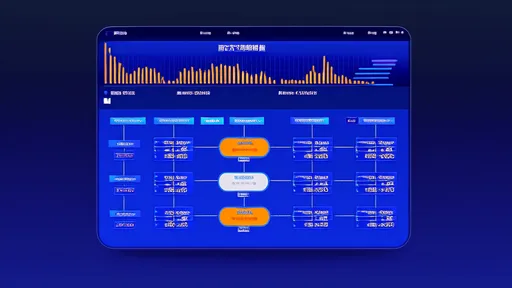
Traditional internet infrastructure deals with congestion by adding more fiber or upgrading equipment. In space, the solutions aren't so straightforward. Rocket launches remain expensive despite reusable boosters, and each new satellite adds to the growing problem of orbital debris. Engineers are now developing what might be called cosmic traffic management systems - sophisticated algorithms that dynamically allocate bandwidth across constellations while avoiding interference with other satellite networks.
One promising approach involves machine learning-powered predictive routing. Unlike ground-based networks where traffic patterns follow predictable daily cycles, space internet usage spikes can occur unexpectedly when events like natural disasters knock out terrestrial infrastructure. New AI models analyze historical usage data, weather patterns, and even social media trends to anticipate where bandwidth will be needed most, adjusting satellite resources in advance rather than reacting to congestion after it occurs.
The physics of radio spectrum present another layer of complexity. While fiber optic cables can carry near-unlimited data through light pulses, satellites must share limited radio frequencies. Spectrum-sharing protocols originally designed for occasional satellite phone calls now strain under the demands of mass-market broadband. Innovative solutions like phased-array antennas that create precise signal beams and frequency-hopping techniques borrowed from military communications are being adapted to prevent the equivalent of cosmic crosstalk between neighboring satellites.
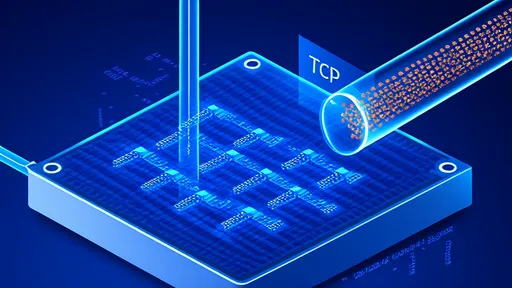
Latency - the delay between sending and receiving data - creates unique congestion challenges in space networks. Even at light speed, signals take noticeable time to travel between ground stations and satellites. Traditional TCP congestion control algorithms, developed for terrestrial networks, often misinterpret this latency as network congestion, unnecessarily throttling data speeds. Space internet providers are developing latency-aware protocols that distinguish between actual bandwidth limitations and the inherent delays of orbital mechanics.
Perhaps the most surprising congestion challenge comes from orbital mechanics itself. Satellite constellations don't hover over fixed locations but instead orbit the planet every 90-120 minutes. This means the available satellites over high-demand areas like cities constantly change. Network engineers must not only manage current connections but predict which satellites will be in position minutes from now to hand off connections seamlessly. It's like changing cell towers every few minutes while ensuring your video call doesn't drop.
The environmental impact of space internet adds another dimension to the congestion problem. Every additional satellite increases collision risks and contributes to the Kessler syndrome - a potential cascade of collisions that could render certain orbits unusable. Responsible congestion control in space must balance bandwidth demands with long-term orbital sustainability. Some companies are experimenting with automated collision-avoidance systems that coordinate maneuvers across different satellite networks to prevent accidents without disrupting service.
Looking ahead, the next generation of space internet may move beyond radio frequencies altogether. Experimental laser-based satellite communications could provide orders of magnitude more bandwidth while avoiding radio spectrum congestion. These optical links face their own challenges - precise alignment requirements and vulnerability to cloud cover - but could revolutionize how we think about off-planet networking. Early tests between satellites show promise, with data rates comparable to fiber optics.
As humanity's dependence on space-based connectivity grows, so too does the importance of solving these cosmic congestion challenges. What began as a niche technology for maritime and aviation communications has become critical infrastructure supporting everything from rural education to global finance. The solutions being developed today - blending physics, computer science, and orbital mechanics - may well define how the entire planet stays connected in the decades to come.
The ultimate goal isn't just preventing digital traffic jams in orbit, but creating a resilient, scalable system that can accommodate humanity's growing data demands while preserving the space environment. Like the early days of the internet, we're witnessing the birth of entirely new networking paradigms - this time not in silicon and fiber, but in the silent vacuum between the stars.