Power Consumption of UAV Visual SLAM

Jul 29, 2025 By

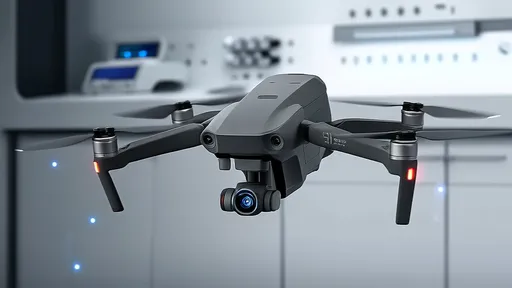
The rapid advancement of drone technology has brought visual SLAM (Simultaneous Localization and Mapping) to the forefront of research and development. As drones become more autonomous, the demand for efficient power consumption in visual SLAM systems has grown significantly. Unlike traditional SLAM methods, which rely heavily on external sensors, visual SLAM leverages onboard cameras and computational algorithms to navigate and map environments. However, this approach comes with its own set of challenges, particularly in terms of power efficiency.

Understanding the Power Drain in Visual SLAM

Visual SLAM systems are inherently power-hungry due to the computational intensity of processing high-resolution images in real-time. The primary contributors to power consumption include the camera module, the processor, and the memory bandwidth required for data handling. For drones, which operate on limited battery capacity, optimizing these components is critical. Researchers have identified that the energy expenditure in visual SLAM is not linear; it spikes during feature extraction, matching, and pose estimation phases. These spikes can drastically reduce flight time, making power optimization a top priority for drone manufacturers.

The Role of Hardware in Power Efficiency

Hardware selection plays a pivotal role in determining the power efficiency of a visual SLAM system. Modern drones often employ specialized processors like GPUs or FPGAs to accelerate image processing tasks. While these processors offer high performance, they also consume considerable power. To mitigate this, some developers are turning to low-power alternatives such as ASICs or neuromorphic chips, which are designed to handle specific tasks with minimal energy usage. Additionally, the integration of edge computing has allowed drones to offload some processing tasks to nearby devices, further reducing onboard power consumption.

Software Optimizations for Lower Power Consumption

Beyond hardware, software optimizations are equally crucial in reducing the power footprint of visual SLAM. Techniques like sparse feature extraction, adaptive keyframe selection, and dynamic resolution adjustment have shown promise in lowering computational demands. For instance, sparse feature extraction focuses only on the most relevant points in an image, reducing the amount of data processed. Similarly, adaptive keyframe selection ensures that only the most informative frames are used for mapping, minimizing redundant computations. These software-level tweaks, when combined with efficient coding practices, can lead to significant energy savings without compromising accuracy.

The Impact of Environmental Factors

Environmental conditions also influence the power consumption of visual SLAM systems. In well-lit, structured environments, the system can operate efficiently with fewer computational resources. However, in low-light or highly dynamic settings, the algorithm may need to work harder to extract and match features, leading to increased power usage. To address this, some drones now incorporate hybrid systems that switch between visual SLAM and other navigation methods (like GPS or LiDAR) based on environmental conditions. This adaptive approach ensures optimal power usage across varying scenarios.

Future Directions in Power-Efficient Visual SLAM

The quest for power-efficient visual SLAM is far from over. Emerging technologies like quantum computing and bio-inspired algorithms hold the potential to revolutionize how drones process visual data. Quantum computing, though still in its infancy, could drastically reduce the time and energy required for complex calculations. Bio-inspired algorithms, modeled after natural systems like insect vision, offer lightweight alternatives to traditional SLAM methods. As these technologies mature, they could pave the way for drones that perform visual SLAM with minimal power, enabling longer missions and broader applications.

Conclusion

Power consumption remains a critical challenge in the deployment of visual SLAM for drones. While hardware and software optimizations have made strides in improving efficiency, there is still room for innovation. By leveraging advancements in both technology and algorithm design, the drone industry can overcome these hurdles, unlocking new possibilities for autonomous flight. The future of visual SLAM lies in striking the perfect balance between performance and power efficiency, ensuring that drones can navigate complex environments without being tethered by energy constraints.


Recommend Posts
IT

Computational Power Options Pricing Model

By /Jul 29, 2025

The financial technology landscape has witnessed a remarkable evolution with the emergence of computational power as a tradable asset. As blockchain networks and cloud computing platforms continue to expand, the concept of hashrate options has gained traction among institutional investors and crypto-native firms alike. These derivative instruments allow market participants to hedge against volatility in computational resources, creating a fascinating intersection between traditional finance principles and cutting-edge distributed systems.
IT

Automotive-grade ROS 2 Real-time Performance

By /Jul 29, 2025

The automotive industry is undergoing a seismic shift toward software-defined vehicles, where real-time performance isn't just desirable—it's non-negotiable. At the heart of this transformation lies ROS 2, the Robot Operating System's second-generation framework, which is increasingly being adapted to meet stringent automotive safety and timing requirements. While ROS 2 was originally designed for robotics, its modular architecture and deterministic execution capabilities have caught the attention of automotive engineers grappling with the complexities of autonomous driving systems.
IT

Dynamic Monitoring of Algorithmic Fairness

By /Jul 29, 2025

The rapid integration of artificial intelligence into decision-making systems has brought algorithmic fairness to the forefront of technological and ethical discussions. As organizations increasingly rely on automated tools for hiring, lending, and law enforcement, concerns about biased outcomes have intensified. This has led to the emergence of dynamic fairness monitoring as a critical discipline for ensuring equitable AI systems throughout their lifecycle.
IT

Space Internet Congestion Control

By /Jul 29, 2025

The race to blanket Earth's orbit with internet satellites has created an unexpected problem - cosmic traffic jams. As private companies and governments deploy sprawling constellations of low-Earth orbit (LEO) satellites, the invisible highways of space are becoming increasingly congested. This congestion isn't just about physical collisions; it's about the digital bottlenecks forming in our planet's increasingly crowded orbital lanes.
IT

Energy Consumption of Multi-Device Context Awareness

By /Jul 29, 2025

In today's hyper-connected world, the proliferation of smart devices has created an ecosystem where multiple gadgets operate simultaneously in our daily environments. From smartphones and laptops to smart speakers and wearables, these devices constantly communicate, process data, and consume energy. This multi-device landscape has given rise to a critical challenge: how to optimize energy consumption without compromising functionality. Context-aware energy management emerges as a promising solution, leveraging real-time situational data to intelligently allocate power resources across devices.
IT

Animation Analysis: Wi-Fi 7 Multi-Link

By /Jul 29, 2025

The wireless connectivity landscape is undergoing its most significant transformation in nearly a decade with the advent of Wi-Fi 7. At the heart of this revolution lies an innovative feature called Multi-Link Operation (MLO), which promises to fundamentally change how our devices communicate with routers and access points. This technology isn't merely an incremental improvement—it represents a paradigm shift in Wi-Fi architecture that could finally eliminate many of the frustrations we've come to accept as normal in wireless networking.
IT

AI Test Case Priority

By /Jul 29, 2025

The rapid evolution of artificial intelligence (AI) systems has necessitated the development of robust testing methodologies to ensure their reliability, safety, and performance. Among these methodologies, AI test case prioritization has emerged as a critical technique for optimizing the testing process. By focusing on the most impactful test cases early in the development cycle, teams can identify critical defects sooner, reduce testing costs, and accelerate time-to-market. This article explores the nuances of AI test case prioritization, its challenges, and its growing importance in the AI landscape.
IT

Please provide the title you would like to have translated into English.

By /Jul 29, 2025

The landscape of API development is undergoing a quiet revolution as intelligent documentation tools transform how developers interact with application programming interfaces. Gone are the days of endlessly scrolling through static documentation or guessing parameter requirements - modern solutions now predict what developers need before they even finish typing.
IT

Cost of Implementing Zero Trust

By /Jul 29, 2025

The concept of zero trust security has gained significant traction in recent years, with organizations increasingly adopting its principles to fortify their cybersecurity posture. However, one of the most pressing concerns for businesses considering this framework is the cost of implementation. Unlike traditional security models that rely on perimeter defenses, zero trust requires a fundamental shift in architecture, processes, and tools, all of which come with financial implications.
IT

Optical Circuit Switching in Data Centers

By /Jul 29, 2025

The relentless growth of global data traffic has pushed traditional electronic switching architectures in data centers to their limits. As hyperscale operators grapple with unprecedented bandwidth demands and energy constraints, optical circuit switching has emerged as a promising solution to overcome the bottlenecks of conventional packet-switched networks.
IT

Ambient Kinetic Energy Harvesting Device

By /Jul 29, 2025

In recent years, the concept of environmental energy harvesting has emerged as a groundbreaking solution to power the ever-growing demand for sustainable technologies. Unlike traditional energy sources that rely on finite reserves, environmental energy harvesting taps into the ambient energy present in our surroundings—ranging from solar and thermal to kinetic and vibrational sources. This innovative approach not only reduces dependency on fossil fuels but also paves the way for self-sustaining systems in remote or hard-to-reach locations.
IT

Transitioning from AIGC Era Test Engineer"

By /Jul 29, 2025

The rapid evolution of Artificial Intelligence Generated Content (AIGC) has sent ripples across industries, compelling professionals to adapt or risk obsolescence. Among those facing transformative challenges are test engineers, whose traditional methodologies are being upended by AI-driven development cycles. The shift isn’t merely technical—it’s cultural, strategic, and existential. As organizations increasingly rely on AI to generate code, automate workflows, and even design test cases, the role of the tester is being redefined in real time.
IT

Code Archaeology: TCP Congestion Control

By /Jul 29, 2025

The history of TCP congestion control is a fascinating journey through the evolution of internet infrastructure, marked by brilliant engineering and occasional growing pains. What began as a simple mechanism to prevent network collapse has grown into a sophisticated system balancing fairness, efficiency, and adaptability. The story reveals how theoretical research and practical deployment have shaped one of the internet's most critical subsystems.
IT

Achieving Independence in Chip Manufacturing Materials"

By /Jul 29, 2025

The global semiconductor industry stands at a critical juncture as nations and corporations grapple with the escalating importance of chip material sovereignty. With supply chain vulnerabilities exposed by recent geopolitical tensions and pandemic-induced disruptions, the race to secure domestic control over advanced chip-making materials has intensified. This shift represents more than just economic pragmatism—it's a strategic realignment that could redefine technological leadership in the coming decades.
IT

Power Consumption of UAV Visual SLAM

By /Jul 29, 2025

The rapid advancement of drone technology has brought visual SLAM (Simultaneous Localization and Mapping) to the forefront of research and development. As drones become more autonomous, the demand for efficient power consumption in visual SLAM systems has grown significantly. Unlike traditional SLAM methods, which rely heavily on external sensors, visual SLAM leverages onboard cameras and computational algorithms to navigate and map environments. However, this approach comes with its own set of challenges, particularly in terms of power efficiency.
IT

Brain-Computer Interface Pulse Encoding

By /Jul 29, 2025

The field of neurotechnology has taken a revolutionary leap forward with the advent of brain-machine interface (BMI) chips capable of interpreting and generating neural pulse codes. These devices, once confined to the realm of science fiction, are now being tested in clinical trials, offering hope for patients with severe motor disabilities and opening new frontiers in human-computer symbiosis. The underlying technology hinges on decoding the brain's intricate pulse patterns—a language of spikes and silences that has puzzled scientists for decades.
IT

Cloud Cost Attribution Analysis Model

By /Jul 29, 2025

The rapid adoption of cloud computing has transformed how enterprises manage their IT infrastructure, yet the complexity of multi-cloud environments has introduced new challenges in cost attribution. As organizations increasingly rely on multiple cloud service providers, understanding where and how resources are consumed becomes critical for financial accountability and operational efficiency. Cloud cost attribution models have emerged as essential tools for breaking down expenses across departments, projects, or even individual teams.
IT

Optimization of EMG Gesture Control Latency

By /Jul 29, 2025

The quest for seamless human-machine interaction has driven researchers to explore innovative control mechanisms, with electromyography (EMG)-based gesture recognition emerging as a promising frontier. While the technology holds immense potential for prosthetics, virtual reality, and industrial applications, latency remains the Achilles' heel preventing widespread adoption. Recent breakthroughs in signal processing and machine learning, however, suggest we may be on the cusp of solving this decades-old challenge.