Automotive-grade ROS 2 Real-time Performance
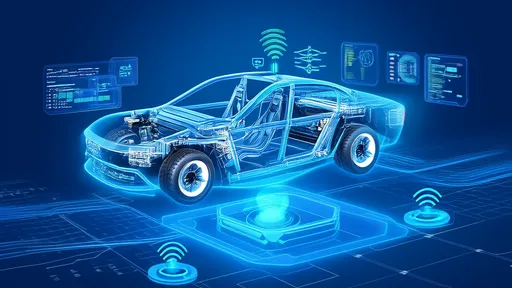
The automotive industry is undergoing a seismic shift toward software-defined vehicles, where real-time performance isn't just desirable—it's non-negotiable. At the heart of this transformation lies ROS 2, the Robot Operating System's second-generation framework, which is increasingly being adapted to meet stringent automotive safety and timing requirements. While ROS 2 was originally designed for robotics, its modular architecture and deterministic execution capabilities have caught the attention of automotive engineers grappling with the complexities of autonomous driving systems.
Why Real-Time Matters in Automotive ROS 2
Unlike consumer electronics where occasional latency might go unnoticed, vehicle systems demand predictable microsecond-level responses. A lane-keeping algorithm that processes sensor data 50ms too late could mean the difference between avoiding an obstacle and a collision. This is where conventional ROS implementations fall short—their general-purpose design lacks the temporal guarantees required for safety-critical automotive applications. The automotive-grade ROS 2 evolution addresses this through fundamental architectural changes, including a real-time optimized middleware layer and time-aware scheduling capabilities.
Major Tier 1 suppliers have been quietly rebuilding their autonomous stack prototypes using modified ROS 2 frameworks. "We're seeing execution time variances reduced from hundreds of milliseconds to consistent sub-10-microsecond performance," noted Dr. Elena Rodriguez, CTO of a prominent automotive software firm. This level of determinism comes from deep modifications to the underlying DDS (Data Distribution Service) implementation, with several vendors now offering ASIL-D compliant middleware specifically for automotive ROS 2 deployments.
The Certification Challenge
Adapting an open-source robotics framework for ISO 26262 compliance represents an enormous engineering challenge. Traditional ROS 2 components weren't designed with automotive safety elements like memory partitioning, watchdog timers, or failure mode analysis. The emerging solution involves creating a safety-certified abstraction layer that maintains ROS 2's API compatibility while meeting ASIL-B and ASIL-D requirements underneath. This dual-layer approach allows automotive OEMs to leverage existing ROS 2 codebases while achieving necessary certifications.
Several consortia have formed to tackle the standardization of automotive ROS 2 implementations. The Autoware Foundation's "ROS 2 for Automotive" working group recently published its first set of guidelines for real-time performance tuning, emphasizing deterministic thread scheduling and priority inheritance protocols. These modifications enable ROS 2 nodes to maintain timing guarantees even during high CPU load scenarios—a critical requirement for systems like emergency braking that must function flawlessly during sensor fusion processing peaks.
Hardware-Software Co-Design Imperative
Achieving true real-time performance extends beyond software modifications. Automotive-grade ROS 2 deployments increasingly rely on heterogeneous computing architectures where different safety-criticality tasks are physically partitioned across multiple processor cores. Some implementations dedicate separate CPU islands exclusively for time-sensitive functions like actuator control, while less critical perception tasks run on adjacent cores. This hardware isolation complements the software real-time enhancements, creating defense-in-depth against timing violations.
The industry is converging on mixed-criticality systems where ROS 2 nodes with different ASIL ratings coexist on the same ECU. Recent advancements in hypervisor technology enable this by providing temporal and spatial separation between safety-critical real-time ROS 2 components and non-critical nodes. For instance, a vehicle might run an ASIL-D steering control node alongside an ASIL-B object detection node on the same hardware, with guaranteed timing isolation between them.
Benchmarking Real-World Performance
Quantifying real-time performance has become a key differentiator among automotive ROS 2 implementations. The industry is moving beyond traditional latency measurements to more comprehensive metrics like worst-case execution time (WCET) analysis and deadline miss probability. Recent benchmarks of production-intent systems show that optimized automotive ROS 2 stacks can achieve end-to-end latencies under 2ms for critical control loops—comparable to traditional AUTOSAR implementations but with greater flexibility for AI/ML workloads.
These timing characteristics are being validated through innovative testing methodologies. Hardware-in-the-loop (HIL) test rigs now incorporate jitter injection capabilities to simulate worst-case timing scenarios, while novel static analysis tools can predict timing behavior before hardware prototypes exist. Such advancements are crucial for OEMs who must prove timing compliance to regulators long before vehicles hit the road.
The Road Ahead
As 2025 vehicle programs enter their final development phases, automotive-grade ROS 2 is transitioning from research projects to production reality. The remaining challenges involve maturing the toolchain for mass production—particularly in areas like over-the-air update compatibility with real-time requirements and thermal management of sustained high-performance computing. What began as a robotics framework is evolving into a cornerstone of next-generation vehicle architectures, blurring the lines between automotive and robotics engineering disciplines.
The ultimate test will come when the first production vehicles with certified ROS 2 stacks navigate complex urban environments with split-second decision-making reliability. Early indicators suggest this milestone is closer than many anticipate, with several OEMs reportedly freezing their ROS 2-based architectures for 2026 model year vehicles. The convergence of real-time computing and autonomous functionality represents not just a technical achievement, but a fundamental rethinking of how safety-critical vehicle software should be architected in the AI era.