Animation Analysis: Wi-Fi 7 Multi-Link
The wireless connectivity landscape is undergoing its most significant transformation in nearly a decade with the advent of Wi-Fi 7. At the heart of this revolution lies an innovative feature called Multi-Link Operation (MLO), which promises to fundamentally change how our devices communicate with routers and access points. This technology isn't merely an incremental improvement—it represents a paradigm shift in Wi-Fi architecture that could finally eliminate many of the frustrations we've come to accept as normal in wireless networking.
Understanding the Multi-Link Breakthrough
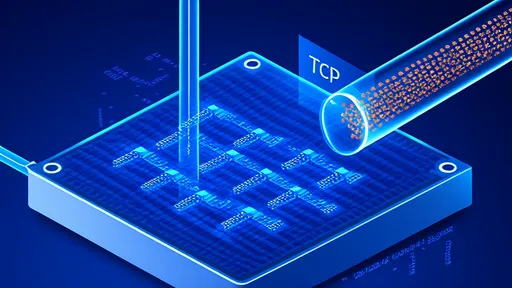
Traditional Wi-Fi networks have always operated on a single connection path between your device and the router, even when multiple frequency bands are available. Wi-Fi 7's Multi-Link technology shatters this limitation by enabling simultaneous connections across different frequency bands (2.4GHz, 5GHz, and 6GHz) or channels. Imagine data packets traveling like commuters who can suddenly use multiple parallel highways instead of being forced into a single congested route—that's the essence of MLO's transformative potential.
The implications of this simultaneous multi-band operation are profound. Devices equipped with Wi-Fi 7 can maintain connections on multiple links at once, dynamically shifting traffic based on real-time network conditions. When interference disrupts one frequency band, the system can instantly reroute data through alternative paths without dropping packets or requiring manual reconnection. This creates what engineers call "deterministic latency"—a fancy term meaning your video calls, gaming sessions, and cloud backups become remarkably consistent even in crowded wireless environments.
Technical Marvel Behind the Scenes
Making Multi-Link work requires sophisticated coordination between hardware and software components. Modern Wi-Fi 7 chipsets incorporate multiple independent radios that can operate simultaneously across different bands. These aren't just separate radios plopped onto a circuit board—they're intricately synchronized systems that share timing information down to the microsecond level. The synchronization ensures packets arriving through different frequency bands can be properly reassembled in the correct order, maintaining data integrity while exploiting multiple transmission paths.
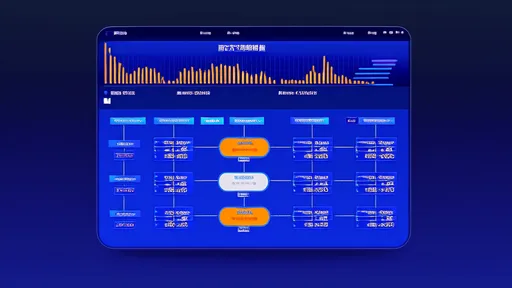
One particularly clever aspect of MLO involves its dynamic bandwidth allocation. The system continuously monitors all available links, measuring factors like signal strength, interference levels, and congestion. Using this real-time data, it intelligently distributes traffic across links—sending latency-sensitive packets like voice data through the most stable connection while routing large file transfers through whatever combination of bands offers the highest throughput at that moment. This happens automatically, without any user intervention, creating what feels like a single ultra-reliable connection.
Real-World Performance Transformations
The practical benefits of Multi-Link become immediately apparent in common usage scenarios. Consider a modern smart home where multiple family members might be streaming 4K videos, attending Zoom meetings, and downloading large game updates simultaneously. Traditional Wi-Fi would struggle with these competing demands, often resulting in buffering or quality reductions. Wi-Fi 7 with MLO can allocate different types of traffic to optimal frequency bands while aggregating bandwidth when needed—your video call might run on the stable 6GHz band while a game download simultaneously uses both 5GHz and 6GHz channels for maximum speed.
Business environments stand to gain even more dramatic improvements. In office settings where dozens or hundreds of devices compete for airtime, Multi-Link's ability to distribute load across multiple frequencies can prevent the network congestion that plagues traditional Wi-Fi deployments. Early adopters report measurable reductions in connection drops and latency spikes, particularly in challenging environments like conference rooms packed with connected devices.
Overcoming Traditional Wi-Fi Limitations
Multi-Link technology directly addresses several long-standing pain points in wireless networking. The dreaded "roaming hesitation"—that brief connectivity loss when moving between access points—becomes far less noticeable because devices can maintain simultaneous connections to multiple APs. Even if one connection weakens as you move, others remain active, providing seamless continuity. This proves especially valuable for mobile applications like VoIP calls or cloud-based productivity tools where even momentary drops degrade user experience.
Another critical advantage involves interference mitigation. In the crowded 2.4GHz band where everything from microwave ovens to Bluetooth devices creates noise, MLO allows devices to maintain alternative connections on cleaner frequencies. When interference is detected on one band, traffic automatically shifts to better-performing links without any perceptible interruption to the user. This self-healing capability makes Wi-Fi 7 networks remarkably resilient in challenging RF environments.
The Road Ahead for Multi-Link Adoption
While Wi-Fi 7 certification began in 2024, full realization of Multi-Link's potential will require both infrastructure and client device upgrades. Early implementations show promising results, but the technology's true capabilities will emerge as more devices support advanced MLO features. Network equipment manufacturers are already developing sophisticated algorithms to optimize multi-link traffic distribution, and we can expect these to become increasingly refined over the next few years.
One exciting frontier involves the integration of Multi-Link with other Wi-Fi 7 enhancements like 320MHz channels and 4K QAM modulation. When these technologies combine, they create synergistic effects that could push wireless performance into territory previously only achievable with wired connections. The industry is particularly enthusiastic about applications in augmented reality, cloud gaming, and industrial IoT—all areas where reliable, low-latency connectivity is crucial.
As with any major wireless standard transition, widespread adoption will take time. However, the fundamental advantages of Multi-Link operation make it likely that this technology will become a defining feature of Wi-Fi 7, setting a new baseline for what users should expect from wireless networking. The days of choosing between range, speed, and reliability may soon be behind us—Wi-Fi 7 with Multi-Link promises all three simultaneously.