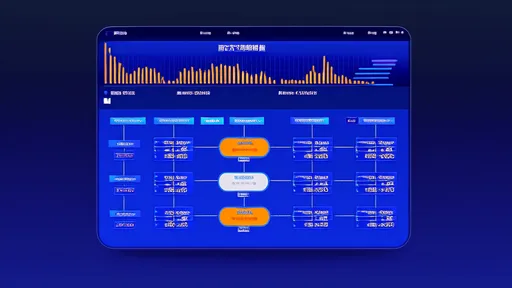
Cloud Cost Attribution Analysis Model
The rapid adoption of cloud computing has transformed how enterprises manage their IT infrastructure, yet the complexity of multi-cloud environments has introduced new challenges in cost attribution. As organizations increasingly rely on multiple cloud service providers, understanding where and how resources are consumed becomes critical for financial accountability and operational efficiency. Cloud cost attribution models have emerged as essential tools for breaking down expenses across departments, projects, or even individual teams.
Traditional cost allocation methods often fall short in multi-cloud scenarios due to the dynamic nature of cloud resources. Unlike on-premises infrastructure with fixed costs, cloud expenses fluctuate based on usage patterns, making it difficult to assign costs accurately. A robust cost attribution model must account for variables such as compute instances, storage tiers, data transfer fees, and even idle resources that contribute to unnecessary expenditures.
The shift from static budgeting to dynamic cost attribution represents a fundamental change in financial governance for cloud-native organizations. Enterprises are no longer satisfied with high-level summaries of cloud spending; they demand granular insights that align with business objectives. This requires tagging strategies, metadata enrichment, and automated tracking mechanisms capable of capturing real-time usage across AWS, Azure, Google Cloud, and other platforms simultaneously.
One persistent challenge in multi-cloud cost attribution involves shared services and dependencies. When multiple teams utilize the same database cluster or networking infrastructure, traditional allocation methods may distribute costs evenly rather than reflecting actual consumption. Advanced attribution models now incorporate machine learning algorithms to analyze usage patterns and assign costs proportionally based on measurable impact.
Shadow IT and ungoverned cloud spending further complicate cost attribution efforts. Departments sometimes spin up cloud resources without central oversight, creating visibility gaps in financial reporting. Modern attribution frameworks integrate with cloud management platforms to detect unauthorized spending and reconcile it with organizational structures, ensuring all cloud consumption gets accounted for properly.
The evolution of FinOps (Financial Operations) practices has elevated cost attribution from an accounting exercise to a strategic discipline. By correlating cloud expenditures with business outcomes, organizations can make data-driven decisions about resource optimization. This approach moves beyond simple cost tracking to establish a feedback loop where spending data informs architectural improvements and procurement strategies.
Technical debt in cloud environments often manifests as poorly attributed costs. Legacy applications migrated to the cloud without refactoring may consume resources inefficiently, but without proper attribution, these inefficiencies remain hidden. Sophisticated attribution models can highlight such issues by mapping costs to specific application components, enabling targeted modernization efforts.
As regulatory requirements around financial transparency increase, multi-cloud cost attribution becomes a compliance necessity rather than just a financial best practice. Industries with strict governance mandates now require audit-ready cost allocation reports that demonstrate precise accounting of cloud resources. This has spurred development of attribution solutions with built-in compliance reporting features.
The future of cloud cost attribution likely involves deeper integration with business intelligence systems. Rather than treating cloud spending as isolated IT expenses, forward-thinking organizations are working to embed cost data into broader performance analytics. This convergence enables scenarios where cloud costs become key performance indicators, directly tied to revenue generation and customer satisfaction metrics.
While tools and platforms continue to evolve, successful cost attribution ultimately depends on organizational culture and processes. Technology can provide the mechanisms for detailed tracking, but without cross-functional collaboration between finance, operations, and development teams, even the most sophisticated models may fail to deliver actionable insights. The human element remains critical in interpreting attribution data and driving meaningful change.