Please provide the title you would like to have translated into English.

Jul 29, 2025 By

The landscape of API development is undergoing a quiet revolution as intelligent documentation tools transform how developers interact with application programming interfaces. Gone are the days of endlessly scrolling through static documentation or guessing parameter requirements - modern solutions now predict what developers need before they even finish typing.

The Rise of Context-Aware Documentation

Traditional API documentation served as reference manuals that developers would consult after encountering problems. Today's intelligent systems flip this paradigm by proactively offering relevant information based on the developer's current context. These tools analyze the code being written, the developer's previous patterns, and common usage scenarios to surface the most pertinent documentation elements.

Major code editors and IDEs now integrate these capabilities at the core of their functionality. When a developer types an API call, the system doesn't just offer basic autocomplete for method names - it provides entire signature templates, parameter explanations, and even links to relevant examples. This contextual awareness dramatically reduces the cognitive load of switching between coding and documentation lookup.

How Intelligent Completion Works Under the Hood

The magic happens through a combination of static analysis and machine learning. Documentation systems first parse the API's formal specification to understand its structure and requirements. They then build semantic models that map how different endpoints relate to each other and how they're typically used in real-world applications.

As developers work, the system tracks their interactions with the API - which methods they call, in what sequence, with which parameters. Over time, it learns common patterns and can predict likely next steps. When it detects a developer beginning to work with a particular API endpoint, it automatically surfaces documentation for related endpoints that are frequently used together.

The Documentation Feedback Loop

One of the most powerful aspects of intelligent documentation systems is their ability to improve through developer interactions. When multiple developers consistently ignore or modify certain suggested completions, the system learns that those suggestions may not be optimal. Similarly, when developers manually look up documentation that wasn't automatically surfaced, the system notes this as a gap in its predictive capabilities.

API providers benefit tremendously from these usage patterns. They can identify which parts of their documentation are most frequently accessed, which endpoints cause the most confusion, and where developers struggle with implementation. This creates a virtuous cycle where documentation improves based on actual usage, which in turn makes the API more approachable for future developers.

Beyond Text Completion - Visual API Exploration

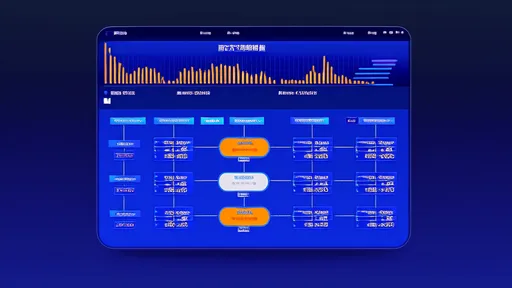
The latest generation of tools goes beyond simple text suggestions. Some now offer interactive visualizations of API structures, allowing developers to navigate relationships between endpoints like exploring a mind map. Others provide real-time validation, visually indicating when parameters don't match expected formats or when required fields are missing.

These visual interfaces prove particularly valuable for complex APIs with deep object hierarchies or numerous optional parameters. Instead of mentally parsing lengthy documentation tables, developers can interactively build requests by selecting options from dynamically filtered lists that only show valid choices based on previous selections.

Challenges in Intelligent Documentation Systems

Despite their advantages, these systems face several implementation challenges. One major hurdle involves maintaining accuracy across API versions - the documentation assistant must precisely track which version of an API a project uses to avoid suggesting deprecated features or incorrect parameter sets.

Another challenge comes from APIs with multiple authentication schemes or regional variations. The documentation system must understand not just what the developer is trying to do, but under what constraints and configurations they're operating. Getting this wrong could suggest approaches that won't work for the developer's specific implementation.

The Human Element in Automated Documentation

Interestingly, the most effective intelligent documentation systems don't eliminate human input - they augment it. Many platforms now allow developers to attach notes, warnings, or examples to specific API elements. These human annotations then get incorporated into the intelligent suggestions, creating a blend of official documentation and community wisdom.

Some teams have found success with systems that learn from their private codebases. The documentation tool studies how the organization typically uses certain APIs and tailors its suggestions accordingly. This proves especially valuable for companies with established patterns or proprietary extensions to public APIs.

Future Directions for API Assistance

Looking ahead, we can expect these systems to become even more proactive. Instead of waiting for developers to begin typing an API call, future tools might analyze the surrounding code and suggest entire API sequences that would accomplish the apparent goal. They might detect when a developer is implementing a well-known pattern using low-level API calls and suggest switching to a higher-level abstraction.

Another likely development involves tighter integration with API testing tools. The documentation system could not only suggest how to make an API call but also generate test cases for it or predict likely failure modes based on the parameter values being used. This would create a seamless workflow from discovery to implementation to validation.

As these tools grow more sophisticated, they'll fundamentally change how developers learn and work with APIs. The documentation will cease to be a separate reference and instead become an integrated part of the development environment - always available, always relevant, and increasingly anticipatory of what the developer needs next.


Recommend Posts
IT

Computational Power Options Pricing Model

By /Jul 29, 2025

The financial technology landscape has witnessed a remarkable evolution with the emergence of computational power as a tradable asset. As blockchain networks and cloud computing platforms continue to expand, the concept of hashrate options has gained traction among institutional investors and crypto-native firms alike. These derivative instruments allow market participants to hedge against volatility in computational resources, creating a fascinating intersection between traditional finance principles and cutting-edge distributed systems.
IT

Automotive-grade ROS 2 Real-time Performance

By /Jul 29, 2025

The automotive industry is undergoing a seismic shift toward software-defined vehicles, where real-time performance isn't just desirable—it's non-negotiable. At the heart of this transformation lies ROS 2, the Robot Operating System's second-generation framework, which is increasingly being adapted to meet stringent automotive safety and timing requirements. While ROS 2 was originally designed for robotics, its modular architecture and deterministic execution capabilities have caught the attention of automotive engineers grappling with the complexities of autonomous driving systems.
IT

Dynamic Monitoring of Algorithmic Fairness

By /Jul 29, 2025

The rapid integration of artificial intelligence into decision-making systems has brought algorithmic fairness to the forefront of technological and ethical discussions. As organizations increasingly rely on automated tools for hiring, lending, and law enforcement, concerns about biased outcomes have intensified. This has led to the emergence of dynamic fairness monitoring as a critical discipline for ensuring equitable AI systems throughout their lifecycle.
IT

Space Internet Congestion Control

By /Jul 29, 2025

The race to blanket Earth's orbit with internet satellites has created an unexpected problem - cosmic traffic jams. As private companies and governments deploy sprawling constellations of low-Earth orbit (LEO) satellites, the invisible highways of space are becoming increasingly congested. This congestion isn't just about physical collisions; it's about the digital bottlenecks forming in our planet's increasingly crowded orbital lanes.
IT

Energy Consumption of Multi-Device Context Awareness

By /Jul 29, 2025

In today's hyper-connected world, the proliferation of smart devices has created an ecosystem where multiple gadgets operate simultaneously in our daily environments. From smartphones and laptops to smart speakers and wearables, these devices constantly communicate, process data, and consume energy. This multi-device landscape has given rise to a critical challenge: how to optimize energy consumption without compromising functionality. Context-aware energy management emerges as a promising solution, leveraging real-time situational data to intelligently allocate power resources across devices.
IT

Animation Analysis: Wi-Fi 7 Multi-Link

By /Jul 29, 2025

The wireless connectivity landscape is undergoing its most significant transformation in nearly a decade with the advent of Wi-Fi 7. At the heart of this revolution lies an innovative feature called Multi-Link Operation (MLO), which promises to fundamentally change how our devices communicate with routers and access points. This technology isn't merely an incremental improvement—it represents a paradigm shift in Wi-Fi architecture that could finally eliminate many of the frustrations we've come to accept as normal in wireless networking.
IT

AI Test Case Priority

By /Jul 29, 2025

The rapid evolution of artificial intelligence (AI) systems has necessitated the development of robust testing methodologies to ensure their reliability, safety, and performance. Among these methodologies, AI test case prioritization has emerged as a critical technique for optimizing the testing process. By focusing on the most impactful test cases early in the development cycle, teams can identify critical defects sooner, reduce testing costs, and accelerate time-to-market. This article explores the nuances of AI test case prioritization, its challenges, and its growing importance in the AI landscape.
IT

Please provide the title you would like to have translated into English.

By /Jul 29, 2025

The landscape of API development is undergoing a quiet revolution as intelligent documentation tools transform how developers interact with application programming interfaces. Gone are the days of endlessly scrolling through static documentation or guessing parameter requirements - modern solutions now predict what developers need before they even finish typing.
IT

Cost of Implementing Zero Trust

By /Jul 29, 2025

The concept of zero trust security has gained significant traction in recent years, with organizations increasingly adopting its principles to fortify their cybersecurity posture. However, one of the most pressing concerns for businesses considering this framework is the cost of implementation. Unlike traditional security models that rely on perimeter defenses, zero trust requires a fundamental shift in architecture, processes, and tools, all of which come with financial implications.
IT

Optical Circuit Switching in Data Centers

By /Jul 29, 2025

The relentless growth of global data traffic has pushed traditional electronic switching architectures in data centers to their limits. As hyperscale operators grapple with unprecedented bandwidth demands and energy constraints, optical circuit switching has emerged as a promising solution to overcome the bottlenecks of conventional packet-switched networks.
IT

Ambient Kinetic Energy Harvesting Device

By /Jul 29, 2025

In recent years, the concept of environmental energy harvesting has emerged as a groundbreaking solution to power the ever-growing demand for sustainable technologies. Unlike traditional energy sources that rely on finite reserves, environmental energy harvesting taps into the ambient energy present in our surroundings—ranging from solar and thermal to kinetic and vibrational sources. This innovative approach not only reduces dependency on fossil fuels but also paves the way for self-sustaining systems in remote or hard-to-reach locations.
IT

Transitioning from AIGC Era Test Engineer"

By /Jul 29, 2025

The rapid evolution of Artificial Intelligence Generated Content (AIGC) has sent ripples across industries, compelling professionals to adapt or risk obsolescence. Among those facing transformative challenges are test engineers, whose traditional methodologies are being upended by AI-driven development cycles. The shift isn’t merely technical—it’s cultural, strategic, and existential. As organizations increasingly rely on AI to generate code, automate workflows, and even design test cases, the role of the tester is being redefined in real time.
IT

Code Archaeology: TCP Congestion Control

By /Jul 29, 2025

The history of TCP congestion control is a fascinating journey through the evolution of internet infrastructure, marked by brilliant engineering and occasional growing pains. What began as a simple mechanism to prevent network collapse has grown into a sophisticated system balancing fairness, efficiency, and adaptability. The story reveals how theoretical research and practical deployment have shaped one of the internet's most critical subsystems.
IT

Achieving Independence in Chip Manufacturing Materials"

By /Jul 29, 2025

The global semiconductor industry stands at a critical juncture as nations and corporations grapple with the escalating importance of chip material sovereignty. With supply chain vulnerabilities exposed by recent geopolitical tensions and pandemic-induced disruptions, the race to secure domestic control over advanced chip-making materials has intensified. This shift represents more than just economic pragmatism—it's a strategic realignment that could redefine technological leadership in the coming decades.
IT

Power Consumption of UAV Visual SLAM

By /Jul 29, 2025

The rapid advancement of drone technology has brought visual SLAM (Simultaneous Localization and Mapping) to the forefront of research and development. As drones become more autonomous, the demand for efficient power consumption in visual SLAM systems has grown significantly. Unlike traditional SLAM methods, which rely heavily on external sensors, visual SLAM leverages onboard cameras and computational algorithms to navigate and map environments. However, this approach comes with its own set of challenges, particularly in terms of power efficiency.
IT

Brain-Computer Interface Pulse Encoding

By /Jul 29, 2025

The field of neurotechnology has taken a revolutionary leap forward with the advent of brain-machine interface (BMI) chips capable of interpreting and generating neural pulse codes. These devices, once confined to the realm of science fiction, are now being tested in clinical trials, offering hope for patients with severe motor disabilities and opening new frontiers in human-computer symbiosis. The underlying technology hinges on decoding the brain's intricate pulse patterns—a language of spikes and silences that has puzzled scientists for decades.
IT

Cloud Cost Attribution Analysis Model

By /Jul 29, 2025

The rapid adoption of cloud computing has transformed how enterprises manage their IT infrastructure, yet the complexity of multi-cloud environments has introduced new challenges in cost attribution. As organizations increasingly rely on multiple cloud service providers, understanding where and how resources are consumed becomes critical for financial accountability and operational efficiency. Cloud cost attribution models have emerged as essential tools for breaking down expenses across departments, projects, or even individual teams.
IT

Optimization of EMG Gesture Control Latency

By /Jul 29, 2025

The quest for seamless human-machine interaction has driven researchers to explore innovative control mechanisms, with electromyography (EMG)-based gesture recognition emerging as a promising frontier. While the technology holds immense potential for prosthetics, virtual reality, and industrial applications, latency remains the Achilles' heel preventing widespread adoption. Recent breakthroughs in signal processing and machine learning, however, suggest we may be on the cusp of solving this decades-old challenge.