Tactile Map Navigation for the Blind: Gaming
For decades, the concept of accessible gaming has been a frontier that developers have only begun to explore. Among the most overlooked communities in this space are visually impaired individuals, who often find traditional video games inaccessible due to their heavy reliance on visual cues. However, a groundbreaking innovation is changing the landscape: tactile map navigation games designed specifically for blind players. These games utilize physical or digitally rendered tactile interfaces, allowing users to "feel" their way through virtual environments, opening up a world of interactive entertainment that was previously unimaginable.
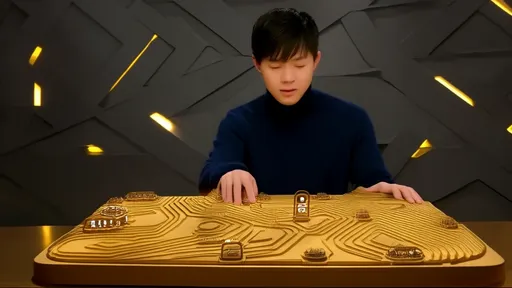
The idea of tactile maps isn’t entirely new—they’ve long been used in educational and navigational tools for the blind. But integrating them into gaming is a revolutionary step forward. Unlike audio-based games, which rely solely on sound cues, tactile map games provide spatial awareness through touch. Players can trace raised lines, detect textures, and interpret Braille-like indicators to navigate mazes, solve puzzles, or even engage in adventure stories. This multisensory approach not only enhances immersion but also strengthens cognitive mapping skills, offering both entertainment and practical benefits.
One of the most compelling aspects of these games is their ability to foster independence. For many blind individuals, navigating unfamiliar spaces in the real world can be daunting. Tactile map games simulate this experience in a controlled, risk-free environment, allowing players to practice wayfinding and problem-solving. Over time, these skills can translate to real-world scenarios, empowering users to move through cities, buildings, and public spaces with greater confidence. Developers have even begun collaborating with orientation and mobility specialists to ensure the games align with real-life navigation techniques.
The technology behind these games varies widely, from simple physical boards with interchangeable pieces to advanced digital interfaces using programmable tactile displays. Some devices employ pin arrays that dynamically rise and fall to create shapes and textures, while others use vibration feedback or temperature changes to convey information. The diversity in design reflects the creativity of engineers and game designers who are committed to making gaming truly inclusive. What unites them all is the focus on user experience—every element is meticulously tested with blind players to ensure intuitiveness and enjoyment.
Despite the excitement surrounding tactile map games, challenges remain. Production costs for high-quality tactile interfaces can be prohibitive, limiting widespread adoption. Additionally, designing compelling gameplay that doesn’t rely on visual metaphors requires a fundamental rethinking of game mechanics. Yet, the growing interest in accessibility tech has spurred investment and innovation, with organizations and startups dedicated to refining these tools. Crowdfunding campaigns and grants have also played a pivotal role in bringing prototypes to market, demonstrating strong demand within the blind community.
Perhaps the most inspiring outcome of this movement is the sense of community it has fostered. Blind gamers, who were once isolated by the limitations of mainstream gaming, now have platforms to connect, compete, and collaborate. Online forums and social media groups buzz with discussions about strategies, reviews of new releases, and even user-generated content. Some players have taken it a step further by contributing to game development, offering invaluable feedback and ideas based on their lived experiences. This collaborative spirit underscores the transformative power of inclusive design.
Looking ahead, the potential for tactile map navigation games is vast. As haptic technology advances, we may see even more sophisticated interfaces that simulate complex textures, temperatures, and resistance. Virtual reality systems with tactile feedback could create fully immersive worlds where blind players explore dungeons, pilot spacecraft, or roam fantasy landscapes—all through touch. The intersection of gaming and accessibility is no longer a niche concern but a driving force for innovation, proving that entertainment can be both fun and transformative for everyone, regardless of ability.